
Horatio
Named after the C.S. Forester character, Horatio Hornblower, a nod to his beautifully curved horns, Horatio had a gravitas unusual for a sheep. He wasn’t a pet, but he was friends with my gregarious pet Vicki, and as she spent her days with me while shepherding, so did Horatio.
Horatio’s dignity bent far enough that he would come up to me for a sniff, but not so far as to let me touch him. Still, I often found him nearby, even in the shed or the yards, as if to let me know he approved of me even if we weren’t best friends like we both were with Vicki.
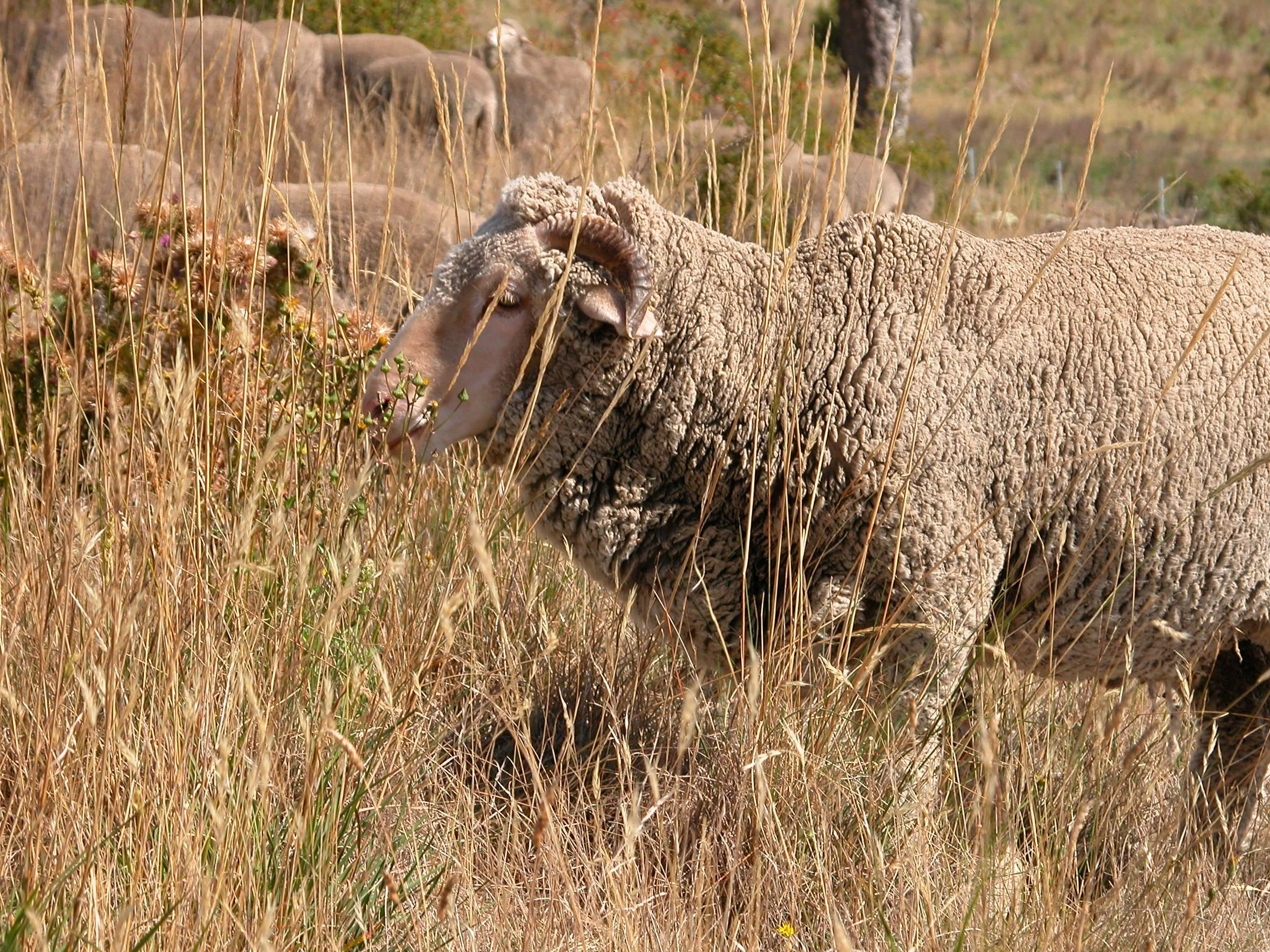
Enjoying a bit of diversity
After 13 years of friendship, Horatio died yesterday, peacefully in his sleep. He laid down in a sheltered spot in the Assisted Living paddock, and didn’t wake up. I knew he’d been unwell for some time, but he was still grazing and drinking, coming in with the other Assisted Living sheep for the every-other-day feed of cracked lupins, and elbowing his way into the trough for his share. Vicki is also in Assisted Living, along with Clara, and the three of them seemed happy to have each other’s company.
In his prime, Horatio regularly topped the list of named sheep for the heaviest fleece. He was never the flock leader, though he often would follow me through a gateway, becoming de facto leader for a short time. Mostly, he was just a reassuring presence: highly recognisable, and never fussed.
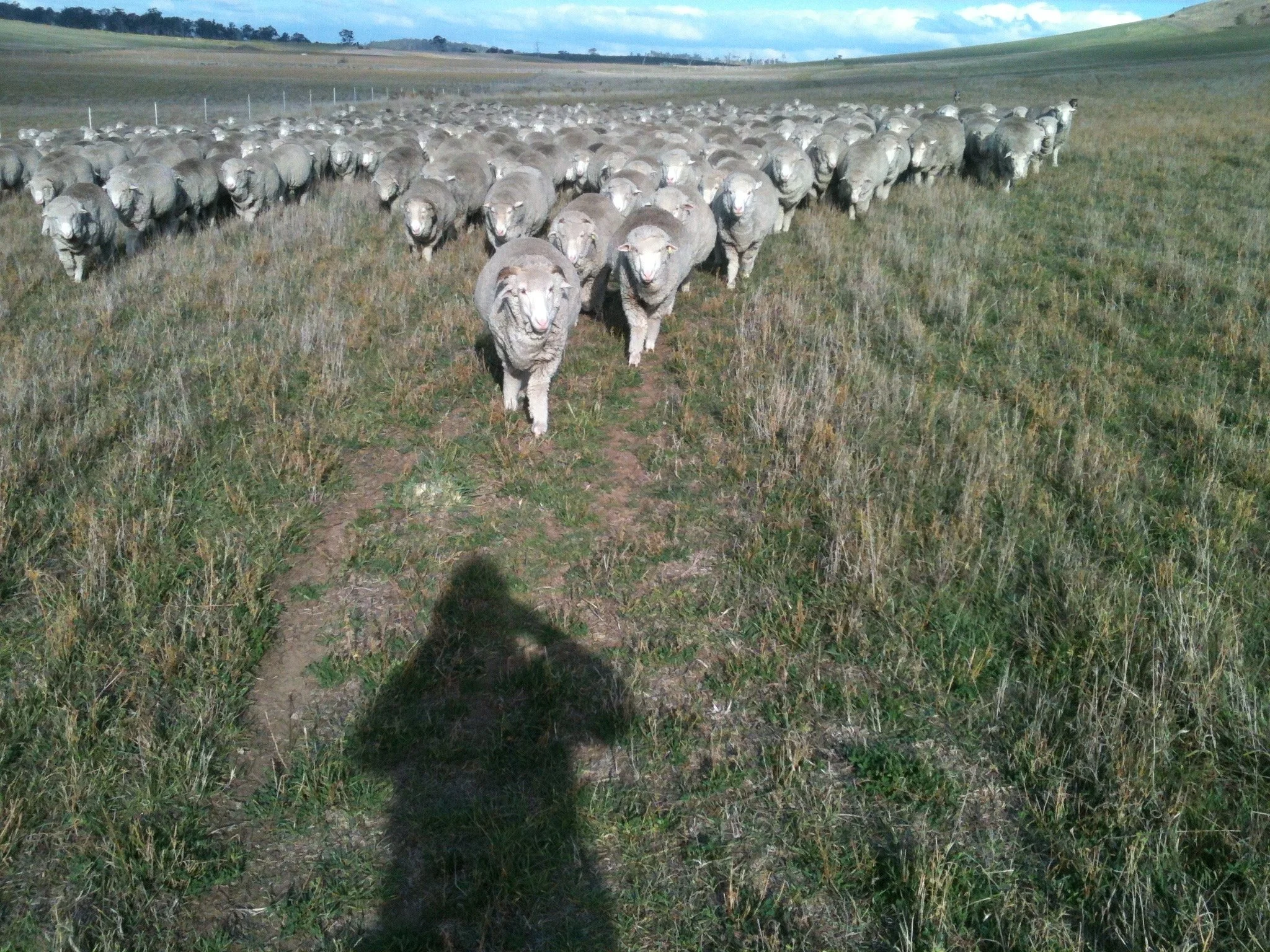
Horatio following me and the flock following him, back in 2015 when he was 3 years old.
I’ve been watching him closely since shearing, as his condition had gone downhill over the past few months, and I worried that he might get cast (unable to get up on his own) somewhere I couldn’t find him. But I couldn’t bring myself to euthanise him, and not just because he was a friend.
The tough decisions we who love our animals face about their end of life are not only nuanced, they are highly individual. Much as I would like to have clear rules for all cases about when it’s time to euthanise, I’ve learned (over and over again) that each case has to be managed on its own terms.
There are a few hard and fast rules. I will euthanise without internal debate or dithering if:
the vet and I agree a cancer is inoperable, either because of its location or the age of the sheep or both;
the sheep is unable to get up and stay upright on its own after a few days of rehab attempts, though this can be longer with a younger sheep as they have more resilience;
a positive test for Ovine Johnes Disease, an incurable wasting disease;
neurological symptoms that cause seizures or other untreatable symptoms;
total blindness, as the animal becomes distressed and disoriented even if still healthy.
For most sheep though, there is an extended grey zone, where, like Horatio, they aren’t thriving, but aren’t actively suffering. As long as they are ambulatory and eating and drinking, I tend to leave them be, though I keep a close eye on them in the Assisted Living flock.
If they are cast — get down or fall down, ending up on one side and unable to right themselves and get up, there is another grey zone. For older, frailer sheep, especially after the stress of shearing, it can be hard to keep them going while working to get them upright.
In a dramatic illustration of how individual the decision process is, though, in the same 24 hour window that Horatio died, I found an older ewe cast against a fence at the bottom of a steep hillside. Given the circumstances, I came within a whisker of euthanising her in situ, rather than dragging her up the hill, carting her to the recovery pen and then trying to get her well enough to stand.
In the end, though, I did exactly that: got miss No-tag into the pen, propped up so that she couldn’t roll onto her bad side, convinced her to eat a handful of chaff and drink a sip of water, then left her to her own devices for 4 hours while I did other things. To my astonishment, when I returned she was not only on her feet but was charging the gate of the pen to get out. She’d eaten everything I left her and drunk all the water and was ready to go, thanks!
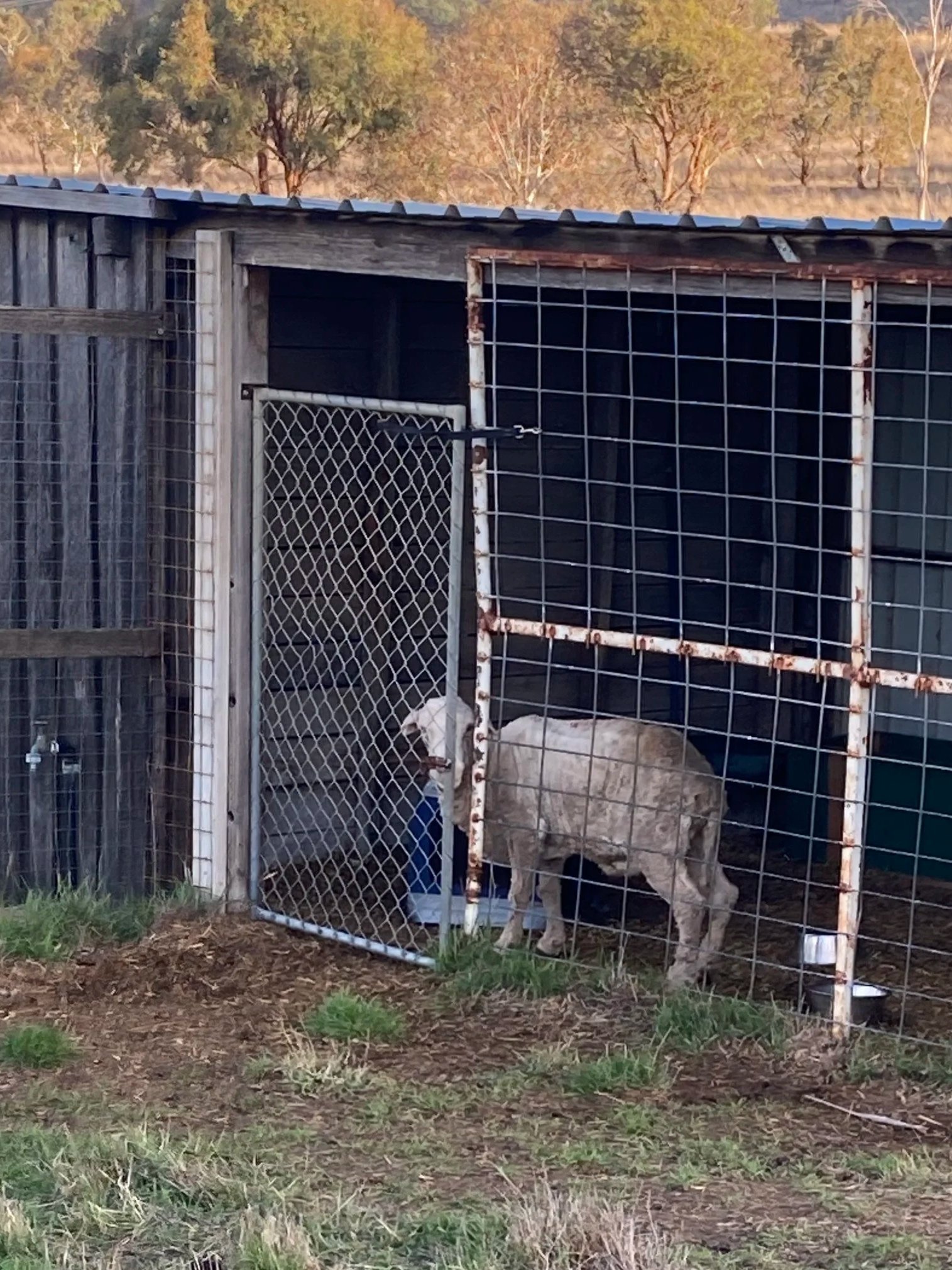
Miss No-tag ready to leave the pen. Note the upturned feed and water bowls, not to mention the look of determination in her eye!
By my criteria, thirteen year old Horatio was not all that close to death, but 15 year old No-tag was unlikely to make it and should probably be euthanised, when in fact the opposite was true. So much for blanket rules.
The professional shepherds of France refer to the sheep that are out front of their flocks in the Alpine meadows searching for better forage as ‘the adventuresome ones’, the ones at the back of the flock who turn to challenge the dogs as ‘the difficult ones’ and all the others as the ‘nameless ones’.
As I work through each case for euthanasia, I’ve realised my nameless ones are nameless no longer. They may not have actual names, but I know that Orange tag 105, a 16 year old, has cataracts and is quite frail. I will have to make a decision soon as to whether it is time for her to be allowed to go. This evening she was still walking and tucked into her feed bucket with gusto, so not just yet.
This process of honouring each sheep—acknowledging their life and contribution—is as important for me as it is for them. Animals we care for connect us to the better parts of ourselves.