
Silk Merino Sport 5 ply: Elegant but Complicated
Our silk merino blend is like a sophisticated woman: elegant with a hint of complication. The elegance is in the heathery look of the silk fibres taking up the dye differently from the merino, and in the shimmer when light catches the silk. Virtually everything we’ve made or seen made in our silk merino is stunning.
The complication, while mild, is enough to be confusing if you’re not in the know. We have three different versions of the 5 ply sport weight, all in 70% merino with 30% tussah silk: Original 5 ply, a three-strand twist which is closer to 8 than 4 ply, a twist-on-twist version of the Original, and the new kid on the block, Slender 5 ply (closer to 4 ply than 8). We’ve now divided the single 5 ply product into Original and Slender, to make it easier for you to choose.
The origin story of WGW 5 ply silk merino sport weight goes back to about 2016, when Rebecca Robinson of Augustbird cajoled me into adding both a 5 ply weight and a silk merino blend. It took her several months of gentle prodding to bring me around, and we settled on sharing a spin of what is now the original sport weight yarn in WGW merino and tussah silk.
I immediately fell in love with the 5 ply — Rebecca was so right! I set to making myself a Gingerbread jumper by Truly Myrtle, using Quarrystone. I was particularly entranced by the way the silk fibres take up the dye differently from the merino fibres, making Quarrystone a shimmering gun metal grey.
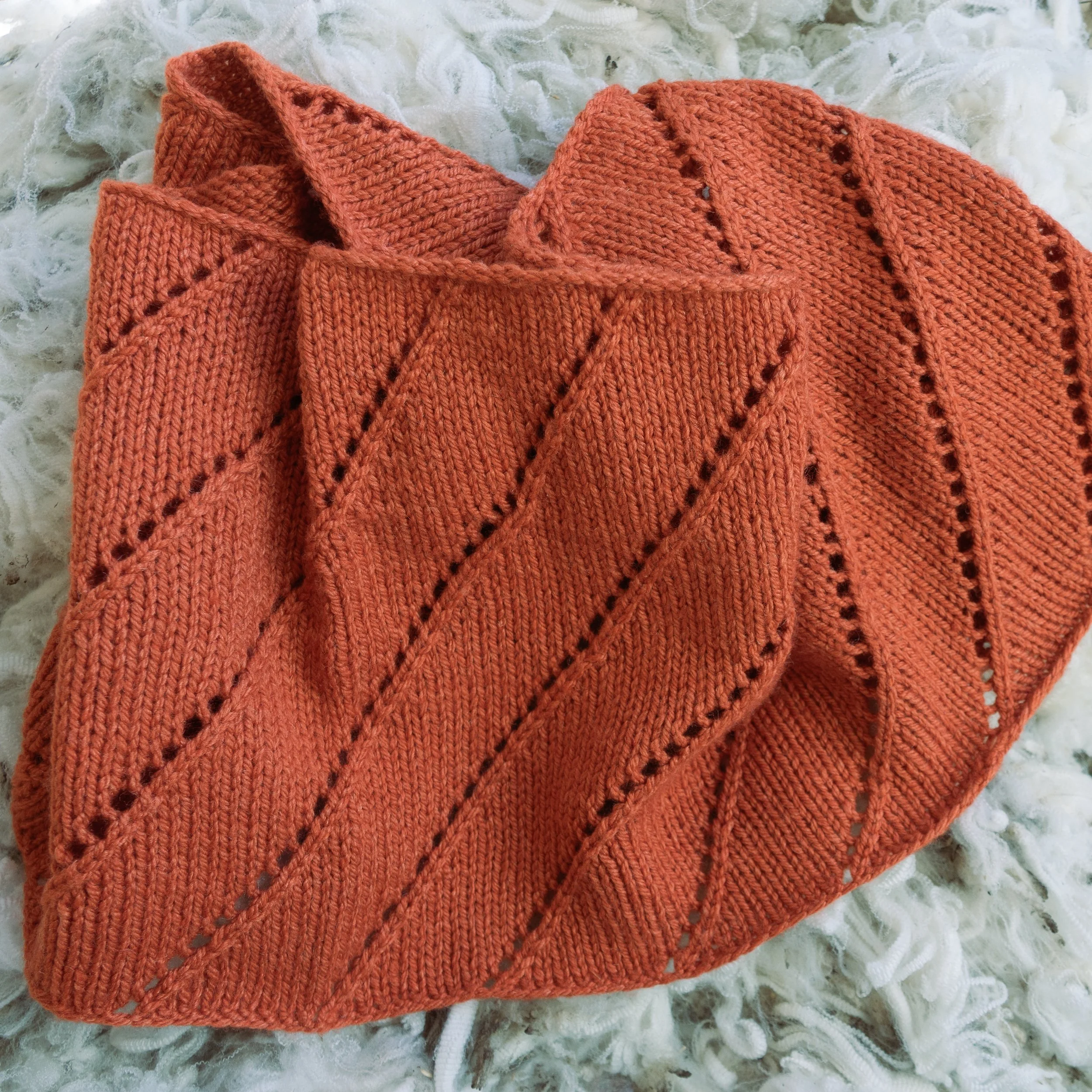
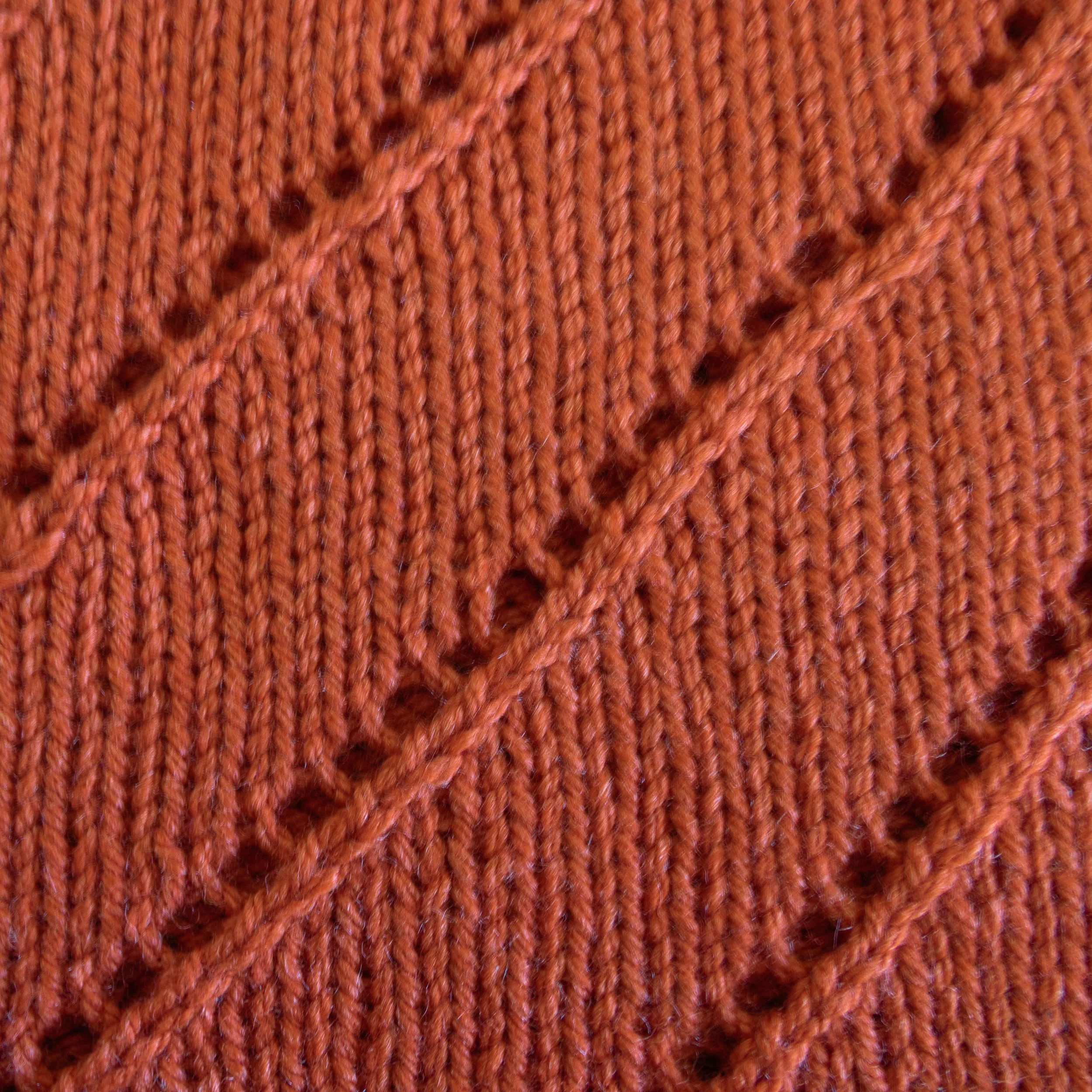
I’m pretty sure I made my Gingerbread jumper in 2017, the year the pattern was published, and am still wearing it today, a decade on. It’s the jumper in the photo below, and it’s my go-to jumper for winter evenings. In honour of this Yarn post, Flea got busy and made a circular Spiral Scarf in Flame 5 ply, which I’m also modelling in the photo.

I need to digress here and write briefly about yarn weights. As experienced knitters will know, ply weights like 8 ply, worsted, aran, etc are highly variable from yarn brand to yarn brand, and it’s important to swatch any yarn you’re not familiar with to establish its gauge.
The yarn milling industry, though, avoids the use of ply as a term, preferring the term ‘twist’ to refer to how many strands of the single are plied together. (The ‘single’ is the building block of all plies, and its size determines how many twists are required to get to a particular weight.)
To identify the ply equivalent of a yarn weight, the industry standard is weight per unit length. In fact, the most reliable way to figure out if you can substitute one yarn for another is to check the meterage and ignore the name of the ply.
Back to our sport weight. In the original version, three fairly substantial singles were twisted together to get our Original 5 ply. It came out closer to our 8 ply than our 4 ply in diameter, but Rebecca and I were not unhappy with that outcome, liking its plumpness and feeling of luxury.
A few years later, I decided to switch to silk as the reinforcing fibre in our sock yarn, and at the mill’s suggestion we also switched to what is called ‘twist-on-twist’ plying. Instead of simply twisting 3 singles together, they started with a much finer single, twisted that into pairs and then twisted the pairs together. The resultant yarn is more resistant to pilling and wear. When I ordered the first spin of the silk merino 4 ply sock yarn I was low on Natural and Quarrystone in the 5 ply, so I asked the mill to make us some of each in the twist-on-twist style.
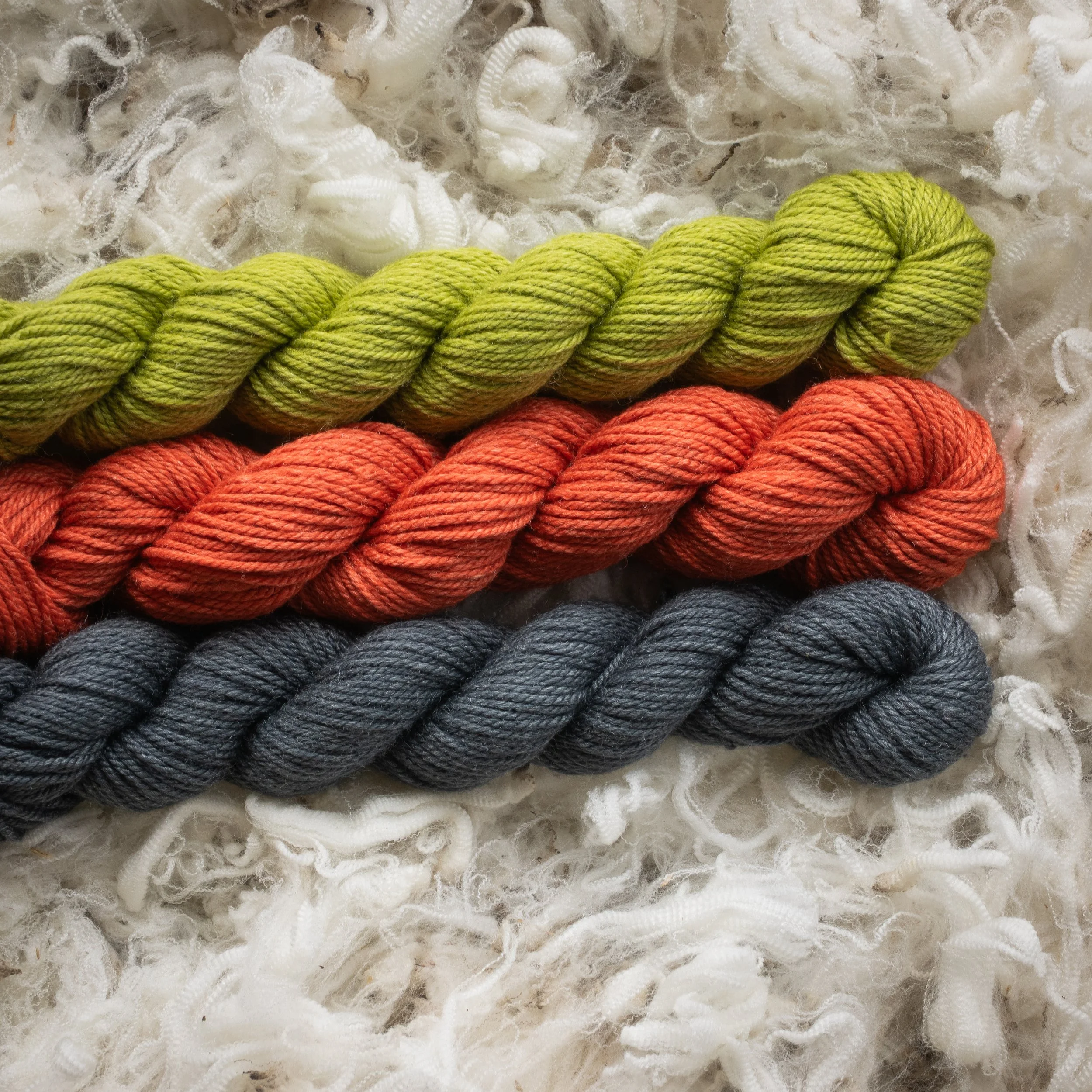
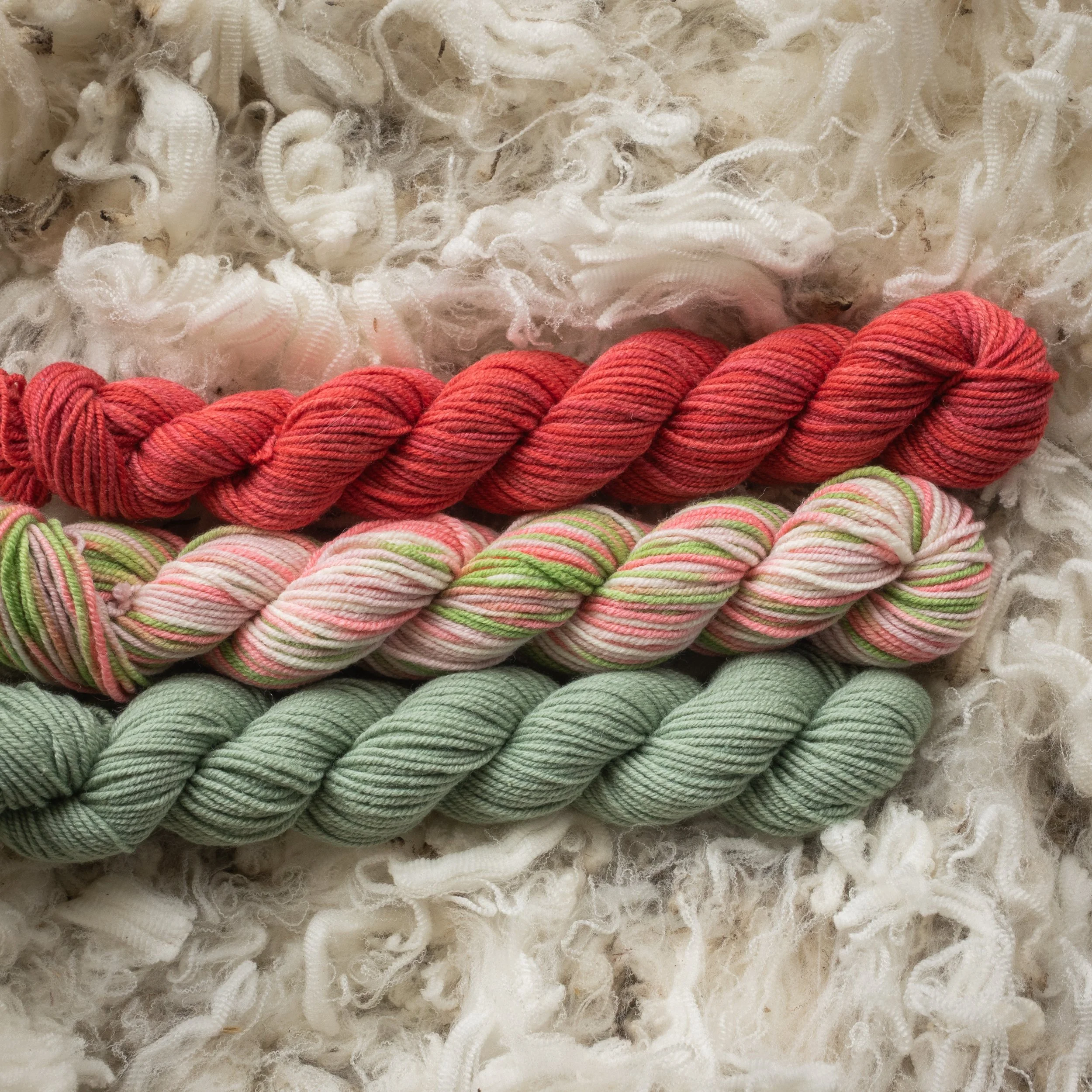
Can you see the difference in the Original (left) and Slender (right) in their mini-skeins?
We have been pleased with the twist-on-twist for its strength and reduced pilling and splitting, and we are gradually transitioning all of our yarn to twist-on-twist. In the ball, it looks quite different from the original twist, but when knitted up they are indistinguishable in terms of handle and appearance (other than fewer pills!).
The success of twist-on-twist led us to try making a 10 ply yarn, something we hadn’t been willing to attempt before because of the likelihood of extreme pilling in a heavier weight yarn. I decided to make the most recent silk merino spin in three weights: 4, 5, and 10.
Enter the Slender 5 ply. For efficiency we wanted to use the same single for all three weights. After wrestling through the maths, the mill concluded they could do it if we were willing to accept a 5 ply that was closer in weight to the 4 ply. By this point, I was wishing our 5 ply wasn’t quite so plump, so I readily agreed.
To make it simpler for you to find exactly the weight and spin style you’re looking for, we’ve separated the 5 ply Sport Silk Merino product into two products: Slender 5 ply and Original 5 ply. Within the latter, only Quarrystone and Natural are twist-on-twist. All of the Slender 5 ply is twist-on-twist.
We look forward to seeing the elegant (and possibly complicated) items you make with this special yarn.