
Mamas and Babies
We’re a week out from the start of lambing, which means vigilance for things like pregnancy toxaemia, but pretty much boredom in terms of stories for readers. So, for something different, I’m bringing you a story about mama and baby cattle, from upstate New York.
Julie Miller has recently become a correspondent and now a friend, sharing her experiences and conundrums about raising livestock in family groups. Another friend, Nuffield Scholar Claudia Benn from Queensland, is also experimenting with variations on family groups in cattle. And our mentor, Fred Provenza, is keeping an eye on our conversations, chipping in with his wisdom occasionally, and cheering us on otherwise.
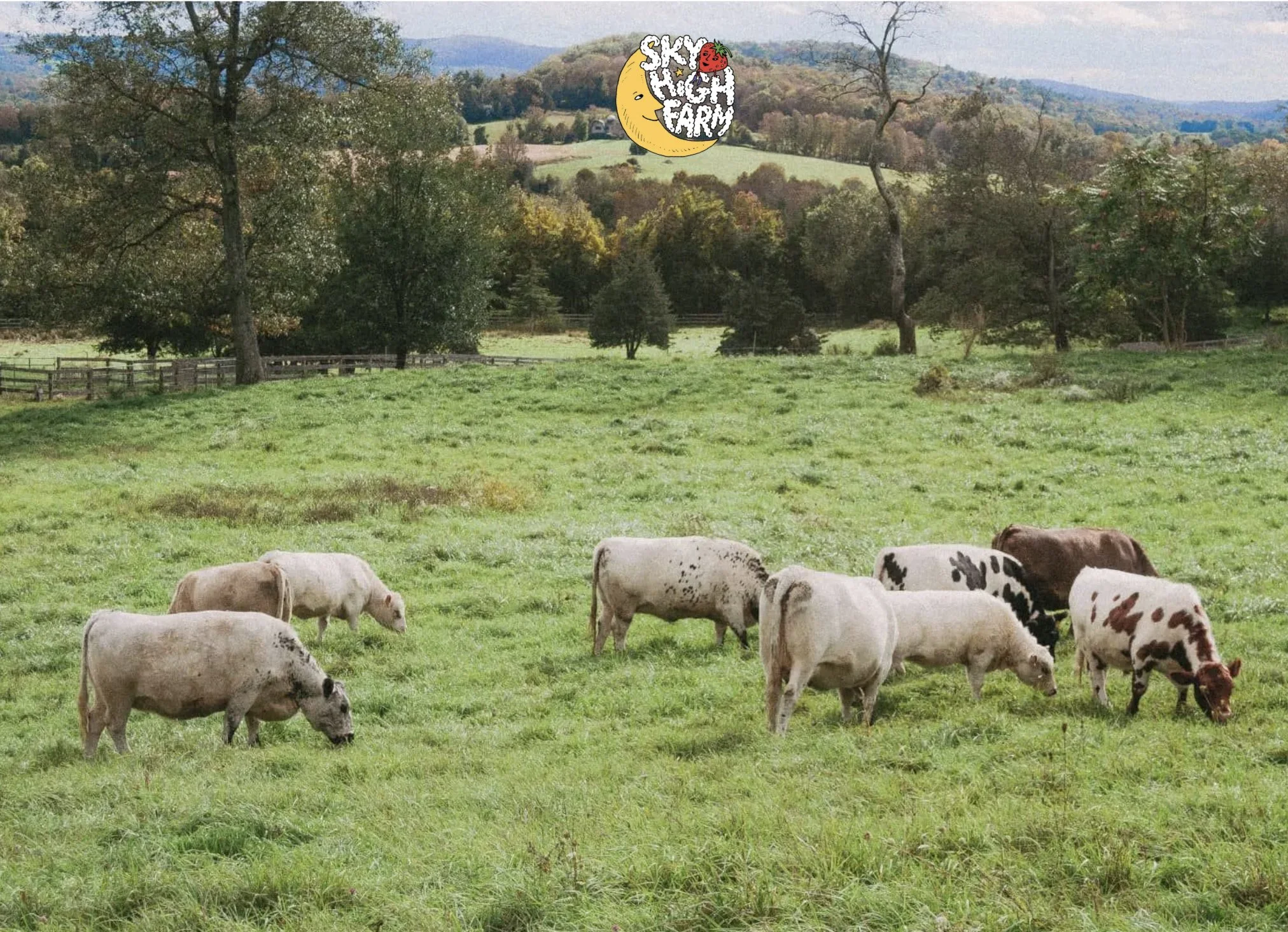
Julie manages a small herd for Sky High Farm, a non-profit entity focused on food security. In this year’s calving season, she had an experience of alternative mothering that she found both challenging and ultimately fulfilling.
In Julie’s words: Here now is a brief tale of Joshua, her biological calf, Jynx - and her adopted calf, Junco.
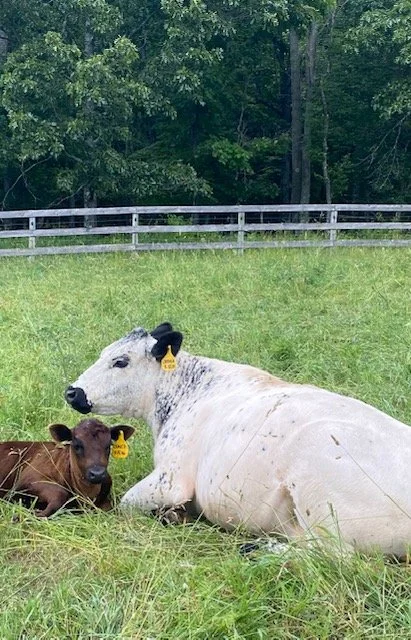
Joshua was a heifer calving for the first time this year. She's British White / Red Devon Cross in good health and body condition, calving just shy of two years. I did not witness the birth or immediately postpartum, but I was called to the scene by our fellows who found the whole herd in a state of commotion after baby Jynx was born.
When I arrived Joshua was completely panicked and exhausted, with other cows being aggressive toward her and her being very aggressive to her calf. After unsuccessfully trying to help them bond, sectioned off from the rest of the herd by a temporary polywire setup, I brought them down to the barn at dark so I could bottle feed colostrum and keep them together, but separated by panelling, for the night. At this point Joshua was still head-butting and kicking the calf. I tried chute nursing for a couple of days, but there was no bonding and the aggression remained.
*I will side note here: we graze in small cell, short duration high density paddocks. I have come to the realization that this is not conducive for nesting/separation and bonding during calving. I will be working on shifting our grazing style during the calving window to provide the time and space for appropriate maternal behaviors.
Jynx, was born on 4/22 - Earth Day! - Fred, I had listened to your webinar that day, Working with Nature. It was absolutely incredible and it helped me tremendously in staying calm, present and ready to learn from the unexpected circumstance.
In those moments while trying to keep her calf safe, I could see the fear in Joshua's eyes and feel her confusion and frustration. I understood she needed help and compassion just as much as her calf. We were side by side, two overwhelmed mothers.
In those moments of empathy, I also thought of her calf, Jynx, without a mother, and Joshua's potential future calves. I questioned the heritability of mis-mothering. I thought of the genetics of the herd moving forward. I thought of my family I had been leaving at home. I thought of the future fellows who would experience our calving seasons to come. In those difficult moments, I felt firmly that I would support Joshua in returning to the herd, but I would not breed her again.
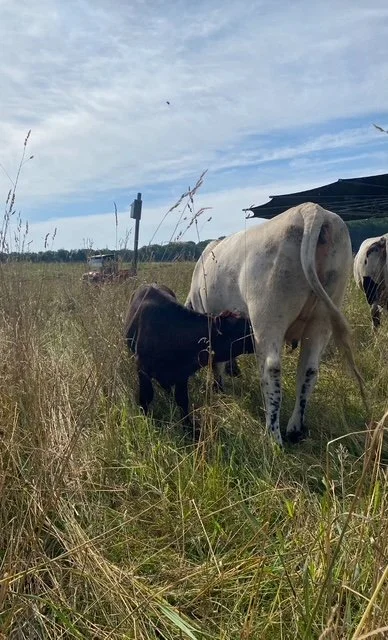
We kept Jynx in the barn with the sheep temporarily as a bottle baby and reintroduced Joshua to the herd. It became immediately apparent when reintroduced that Joshua thought a different calf was hers, and normal mothering behaviors were obvious and strong. Joshua’s mother is Jesenia - and the calf, Junco, who Joshua clearly thought was her own, was her half sister (Jesenia’s calf this year). It took a while for all to settle, but with Jesenia unphased by Joshua’s pursuit, Junco settled in with two mother figures, nursing and cuddling with both, a state of peace amongst the three.
A couple of weeks back, it was time to move the breeding herd to the property down the road in preparation for breeding (beginning shortly). I was faced with the question of including Joshua in the breeding herd. I knew I wanted to keep Junco with her true mother, and to learn from the breeding herd that she will join throughout all phases of the year.
I reached out to Nan and Claudia for advice, and they were both incredibly supportive and helpful. Nan expressed that allowing Joshua to continue bonding with Junco would most likely be the most healing path forward for her, and that struck me. Joshua and Junco have stayed together within the breeding herd, and I plan to see where this second chance leads. At this point in time, Joshua has become Junco’s primary mother. Joshua is protective and loving.
Jynx, too, has found a safe place, as one of the other cows accepted her (and she quickly refused bottles) after returning to the herd. Joshua and Jynx live happily, side by side. They are all doing well.
I will also add here, this is the first year that I eliminated all weaning intervention. I have gone through iterations of “low-stress” weaning, but continued to feel unsettled about the practice. So this year, the yearling siblings remained with their mothers throughout gestation and calving. I monitored and tracked nursing over the winter and leading up to calving. While there were a few calves nursing up until parturition, there is only one yearling currently who still (infrequently) nurses on her mother postpartum. Even those that were nursing up until the end allowed the new calf to join peacefully, without competition. This will be a long-term learning experiment/experience.
This journey with this herd is one I know I was meant to have, and I am grateful for them and this opportunity every day. I thank you all as well for welcoming me into your conversations and providing me with your wisdom as I continue on this path.
From Claudia: Julie – I got so much more re-reading your calving scenario this year and will be very interested to know how it progresses next year. I feel like there is so much at play there that we can’t fully understand about generational bonds and mothering instincts. In relation to your stock density note and to Fred’s comments (below), this has been (and truthfully still continues to be) one of my greatest conundrums - balancing livestock behaviour/health/productivity and land condition/vegetation biodiversity. Somehow this topic has often felt conflicting for me. We hear so much about the benefits of high stock density for soil health, carbon sequestration, vegetation biodiversity etc., but my own observations have shown it to have a negative impact on livestock behaviours and social systems (in our context).
From Fred: The way you are learning can come only from intimate contact with animals, from observing, questioning, wondering, and experimenting. That’s why I’m not a fan of ever more technology including virtual fencing. We are only distancing ourselves from plants and herbivores.
I love the way you are moving with natural weaning and questioning high-density grazing during calving. More generally, I think people have come to accept that as the way animals graze naturally, and that is simply not the case. I have observed domesticated and wild herbivores in the U.S, and read about others, and the only time they are in large herds is during winter when snow causes them to bunch up on winter ranges. Otherwise, they spread far and wide as they migrate to higher elevations.
With domesticated livestock, we have come to rely on fences and grazing systems rather than culture to influence diet and habitat selection (see attached manuscript Twenty-Five Years of Paradox in Plant-Herbivore Interactions and “Sustainable” Grazing Management). Interestingly, social organization in herbivores may lead to rotational grazing without fences. This notion is based on four assumptions: (1) social herbivores live in extended families, (2) maintaining the cohesiveness of families and their home ranges influences behavior, (3) individuals within families differ in their preferences for foods and habitats, and (4) families maintain their unique identities by avoiding prolonged contact with other families.
If these assumptions are correct, then social interactions within families are likely to encourage animals to eat a broader array of plants and to forage in a greater variety of locations as individuals maintain the cohesiveness of the group and respond to different preferences of individuals within the group. Interactions among families are likely to further increase movements across landscapes as different families avoid prolonged contact with one another. Hence, diet and habitat breadth both may increase through social organization, and culture may be critical for maintaining the integrity of social species and the biodiversity of landscapes.
From Julie: Fred, I love the insight and the passion! Thank you for sharing that article, it is new to me and so much to explore within the text. There is so much to learn here. I have to admit, I have been in the midst of a bit of a paradigm shift this season and hearing the wisdom from you all certainly feels like a guiding light.
A bit about Julie:
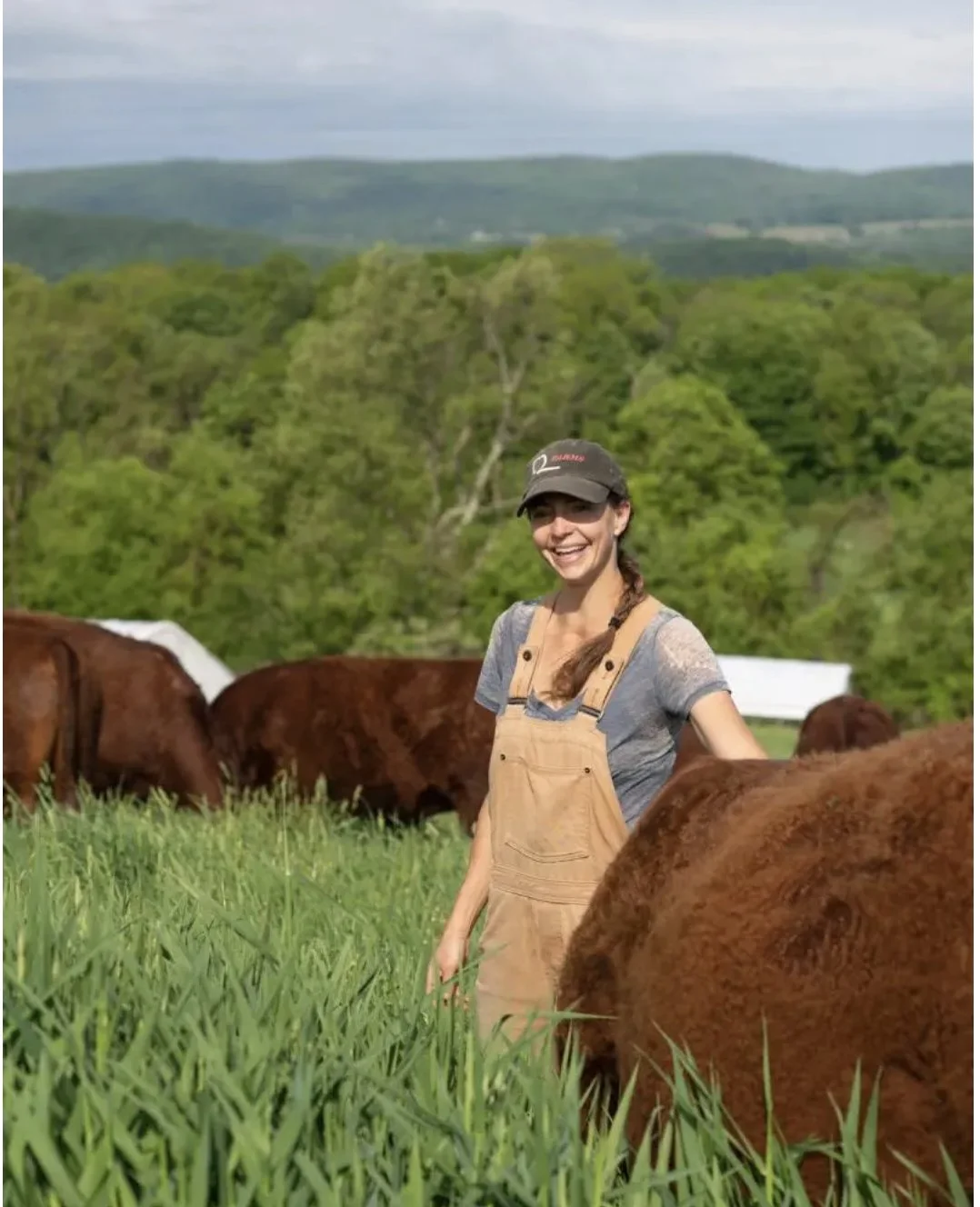
I came to farming later in life, starting my first livestock apprenticeship at age 32. I had spent a decade after college grappling with the uncertainty of purpose and place. Livestock farming was a leap - inexplicably calling - but in that first season, I knew. Farming grounded and centered me in a way I didn’t know possible. And, as the years went on, an intimate connection to land and animals has broken me wide open.
I am now a part of the change of season, I am a part of birth and death. I am woven into the complexity and beauty surrounding me. I am privileged and challenged to feel and experience deeply, daily. I’ve met my partner, and had two children, farming through my pregnancies and postpartum experiences, at times in sync with the animals around me. I’ve observed other mammals’ gestations, births, lactations, and familial relations mimic my own, the perceived distinctions between us fading away - brief moments of transcendence, no two of us alike, yet a clear oneness to us all.
I have found myself at an inspiring organization, Sky High, with open minds, allowing me to explore, farm and teach through observation and with compassion. I have the honor of mentoring others through our fellowship program - and while we are a production operation, I strive to open pathways of individual connection, reverence, and love for all of the animals who are our partners on this journey, and the landscapes on which we step. The land and the animals, our teachers.
Note to Yarn from the Farm readers: If you would like a copy of Fred’s paper: Twenty-Five Years of Paradox in Plant-Herbivore Interactions and “Sustainable” Grazing Management, send me an email (nan@whitegumwool.com.au) and I’ll forward it to you.